
On July 2nd, 2026, then UK Prime Minister, Kier Starmer officially apologised in parliament to people affected by the injustice of forced adoption, as the UK government acknowledged the role of the state in the appalling practice and unveiled a package of practical support worth £4 million over three years.
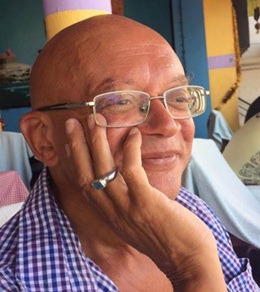
Broadcaster and writer Phil Frampton is the founding chair of the Care Leavers Association. In 2007 he presented a UK Channel 4 documentary Bring Back Orphanages, arguing that it was poor management led to abuse rather than the homes themselves.
Phil’s 19 minute video “Bring Back Orphanages” is on YouTube.
Big Business, Orphanages and Child Slavery
(A talk given to the International Labour Movement in 2025)
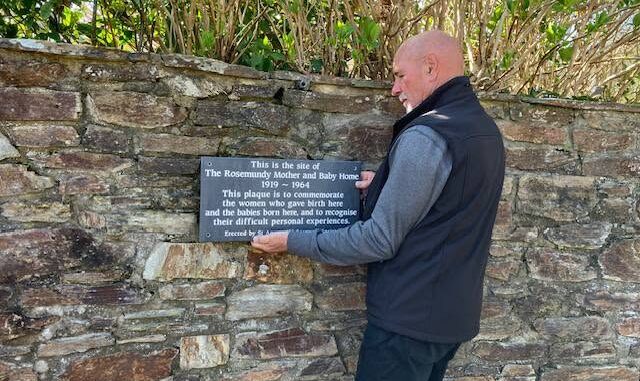
Phil alerted us to a plaque in Cornwall to be installed on 10 May 2025 in recognition of the suffering of unmarried mothers and children at the hands of state institutions. This is the first of its kind in the UK and acknowledges abuse that had been going on only until quite recently. Another plaque is due in Lancaster on 23 May.
Fundamentally these were baby farms to feed the adoption market in the UK. There was a shortage of children after the Second World War and this created a market. In addition it enabled the government of the day to sidestep benefits for unmarried mothers.
It viewed children as commodities and ignored the psychological abuse suffered by mothers and children from forced separation. Often unmarried mothers had to give birth without anaesthetic, this being viewed as a form of punishment for their “sin”.
Not only that, they were given drugs to stop them lactating after their baby had been removed. These drugs have since been found to be cancerous. All this was designed to destroy the bond between mother and child.
Fostering has now become big business. The switch from orphanages has resulted in a cheaper model from the state’s point of view. But this system is chronically inadequate. In the UK we are 6500 places short resulting in up to 13,000 children relying on “emergency accommodation”. This could be caravans or even tents.
The success rate of foster placements is also low, with 2 years being the typical period before the child is placed in a new foster home. Some children suffer up to 50 placements as they grow up. One child to Phil’s knowledge suffered 70 placements.
Internationally there is ideological pressure to move from orphanages to foster care. The UN calls for a ban on orphanages. But many countries lack the facilities to cope with such a transfer. In Egypt, for example, there are 2 million children living on the streets.
In the UK under Thatcher 20,000 orphanage places were lost. A concomitant issue was the profits made from selling the orphanage buildings which were often substantial dwellings on prime real estate. (“Selling the Family Silver”).
Life was not perfect in the orphanages and there was some abuse. However, there was solidarity among the children. This mutual love could act as an antidote when there was a lack of it from the carers. The children were not so much looking for love from their carers as respect. It was the children’s lack of voice in the system which was a key shortcoming.
Training of carers to show more respect for the children costs money which was another factor in favour of fostering from the state’s point of view. Self organisation of children did develop, however. A good example is their influence in the way the Kinderhaus in Berlin is run.
At the Kinderhaus there is a democratic youth council with power over staff appointments. The children are confident to expose any tendency to abuse. Any complaint is not vulnerable (because coming from a single individual as in fostering) but is backed up by fellow members of the youth council. Giving the children an effective voice is central.
Fostering as a whole has been taken over by venture capital and is now big business. These companies are international parasites. They fund fostering agencies which means they get guaranteed money from governments and don’t care if an agency fails. Phil cited an example where 100 kids suddenly lost support and were given 48 hours to relocate. The local authorities are stuck with the venture capitalists as the cuts have liquidated all their in house provision.
The fostering model in addition neglects the family traditions of many communities. Phil cited the example of a family of five Vietnamese orphans at the Kinderhaus orphanage. Succour provided by the parents was no more so the siblings had a mutual support system which was possible at the orphanage and he witnessed it over a 6 year period. However, the UK fostering based system has no such capacity, so the sibling group would be destroyed, as often happens. The children are routinely split up and some adopted, some in foster homes with terrible consequences.
- Questions and feedback session
AA suggested there were times of social upheaval when orphanages were virtually the only option. He cited the Russian Revolution as an example and referred to the book by Soviet pedagogue Anton Makarenko “The Road to Life”. Phil responded by drawing our attention to the 1919 Moscow Declaration of the Rights of the Child.
AA also wondered whether “divide and rule” might have been another factor influencing the decisions of the state to move from orphanages to foster homes and Phil agreed with this.
BB gave a comprehensive account of the situation in Australia. Some children of unmarried UK mothers had been transported from the UK only to end up as slave labour on Australian farms. They were falsely told they were orphans in order to “make a fresh start”.
She reflected on the advent of the nuclear family being a distortion of historical practices which was imposed on the indigenous population by British colonial rule. Indigenous children were forcibly taken from their families and were put into institutions, fostered or adopted out to non-Indigenous families.
In both these cases child slave labour formed a most profitable option for Australian farmers. The practice went on right up to the 1970s. The destruction of family ties has resulted in a whole army of people looking for their roots.
CC reported on similarities with the situation in Chile. During the 70s and 80s the Chilean dictatorship also confiscated children and sold them to families in Europe. Chilean mothers were told their babies had died. Left wing families were especially targeted as the regime wanted to minimise socialism in future generations.
DD reported on a similar situation in Spain under Franco, Again parents were told their babies had died.
EE reflected on the breakdown of family support. Whereas it used to be possible to “leave the kids with gran up the road” this was no longer possible as people are driven further afield in search of work.
She reported on a harrowing incident where a child had been taken into care in such an inhumane way (in the night, police involved) that whatever benefit the child might have received was almost totally destroyed resulting in mental health issues.
Phil summed up: If the state prefers fostering to orphanages, it also prefers adoption to fostering as the financial costs are then taken out of its hands.
The care system is under intolerable pressure. Social workers are underfunded resulting in poor placements. There is no training for those wishing to adopt.
Violent kids are set up to fail. When the system fails them and they end up in care there is a stigma attached. Anyone in care “must have done something wrong” is the common refrain. This is exacerbated by the equally common response: “Do that again and we’ll put you in care.”
Children need and must have a voice. An uplifting note was reference to an autonomous Peruvian organisation of child workers aged 8 to 17 called MANTHOC which has been established for 50 years.
Be the first to comment